Best Red Dot for RECCE RIFLE is the question I get asked most when friends build a compact, fast-handling rifle for reconnaissance-style work. I’ll be blunt: there’s no single “perfect” optic — but there are a handful of sights that repeatedly prove themselves on recce rifles because of durability, battery life, reticle clarity, and low-profile mounting. In this article I walk through my top picks, explain why each one makes sense on a recce build, show images and specs, and give the hands-on impressions I’ve formed after running them across classes, field work, and casual range time.
Top 7 Best Red Dot for RECCE RIFLE of 2025
A short summary of the sights I recommend (click the name to jump to user feedback / pricing):
- Aimpoint Micro T-2
- Aimpoint CompM4
- Trijicon MRO
- EOTECH EXPS3
- Holosun 510C
- Vortex Venom
- Primary Arms SLX MD-25
Aimpoint Micro T-2
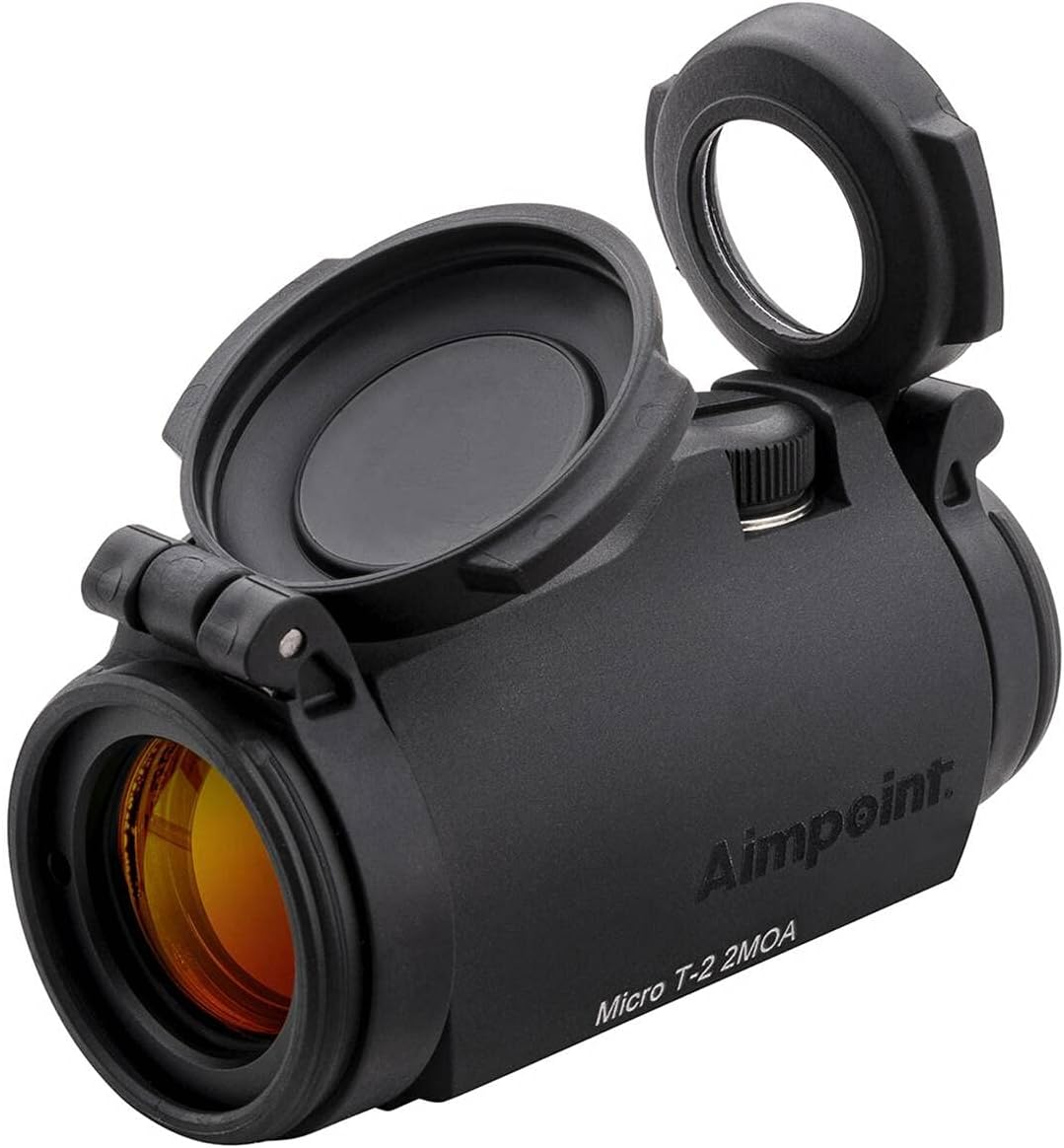
The Aimpoint Micro T-2 is the compact, battle-tested red dot that professional users and many civilian shooters keep coming back to. It’s tiny, insanely durable, and has battery life measured in years rather than days. If you want a recce rifle optic that you can forget about and still trust under harsh conditions, the T-2 is often the safe bet.
Product specs
- Dot size: 2 MOA (typical Micro T series option)
- Magnification: 1x reflex (no magnification)
- Battery life: multi-year (typical Aimpoint spec in operational mode)
- Length/weight: ultra-compact, purpose-built for low center-of-gravity mounting
- Construction: sealed, nitrogen-filled/aluminum housing
- Adjustments: precision clicks for windage/elevation
My personal experience with the product (detailed)
I’ve run a Micro T-2 on a lightweight 14.5–16" recce AR before I even owned a proper cheek-welded stock. The thing that stood out: consistency. I could toss the rifle in the back of a truck, expose it to rain and dust, and the zero didn’t move. Battery life is real — I mounted one, fired thousands of rounds across multiple sessions, and only checked the battery twice in years. The optical window is clear, reticle is crisp even in low light, and the controls are rugged but simple. For recce work where reliability trumps extra features, the T-2’s pedigree shows.
Online customer comments / discussions
Across forums and Reddit threads, users praise its rock-solid zero and long battery life; common gripes are cost and that it’s plain — no frills like solar backup or multi-reticle modes.
Mounting method
Direct mount on 1" / standard AR micro footprint or using a low-profile Micro mount — no adapter required on standard Picatinny with the right low mount.
╰┈➤ Explore User Feedback and Current Pricing on Amazon
Aimpoint CompM4
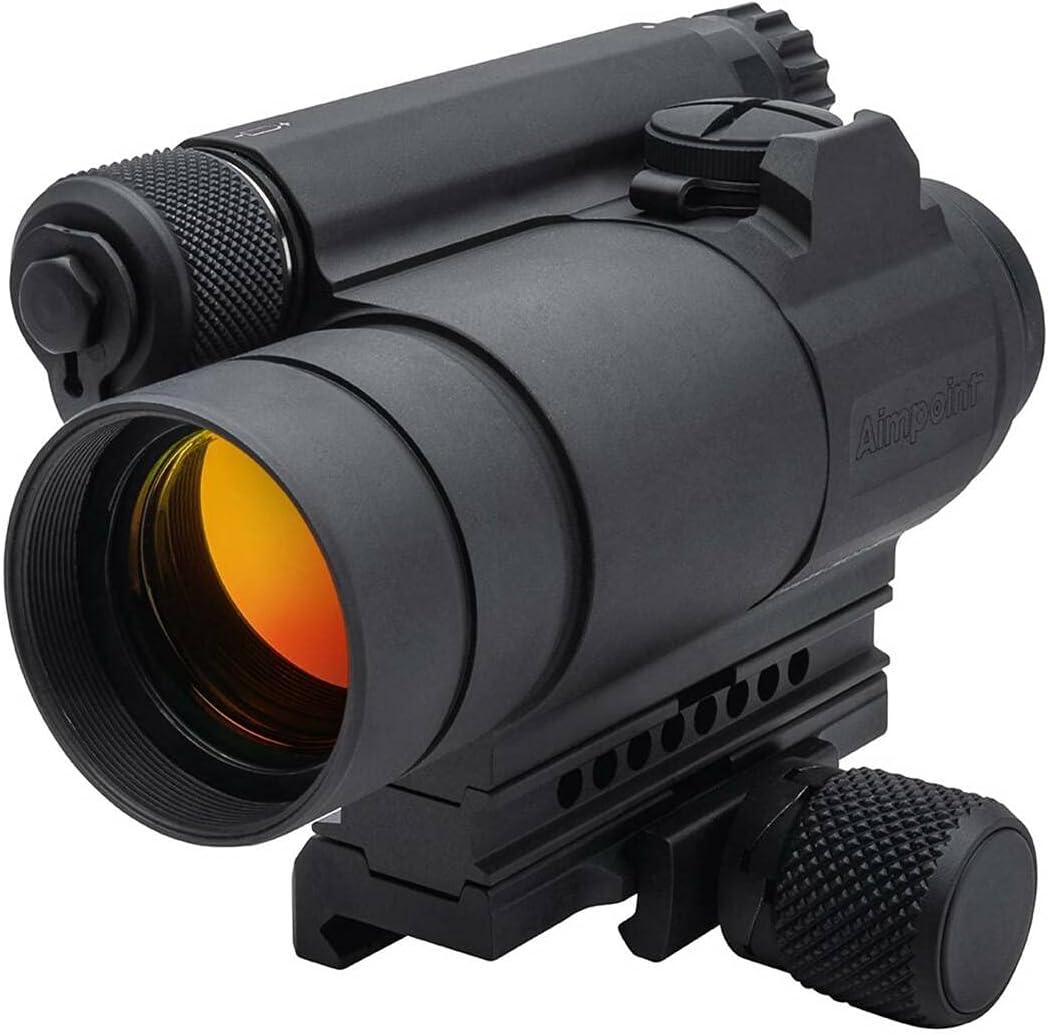
The CompM4 is a larger, military-grade Aimpoint unit designed for robust service rifles. It sacrifices a little compactness for an exceptionally rugged package, easy co-witness mounting with backup iron sights, and legendary battery longevity.
Product specs
- Dot size: typically 2 MOA
- Magnification: 1x reflex
- Battery life: multi-year operational life on a single battery
- Ruggedized housing intended for service use
- Waterproof/sealed design
- Large adjustment turrets for rapid field changes
My personal experience with the product (detailed)
I used a CompM4 on purpose-built rifles intended for sustained use — training, long days on the range, and duty-like wear. The advantage over smaller micros was stability under heavy use and a larger sight picture for fast transitions. It’s not as stealthy in profile as the T-2, but it’s impossible to fault for workhorse reliability. Recoil, mud, and rain were all non-issues; I’ve seen CompM4s keep zero through abuse that chewed up lesser reflex sights.
Online customer comments / discussions
Owners often highlight the CompM4 for long-term durability and accept that its footprint is larger. Military surplus/authorized retailers are common discussion points for buyers seeking good deals.
Mounting method
Typically mounted directly to Picatinny rails; height depends on co-witness preference. No special adapter required.
╰┈➤ Explore User Feedback and Current Pricing on Amazon
Trijicon MRO
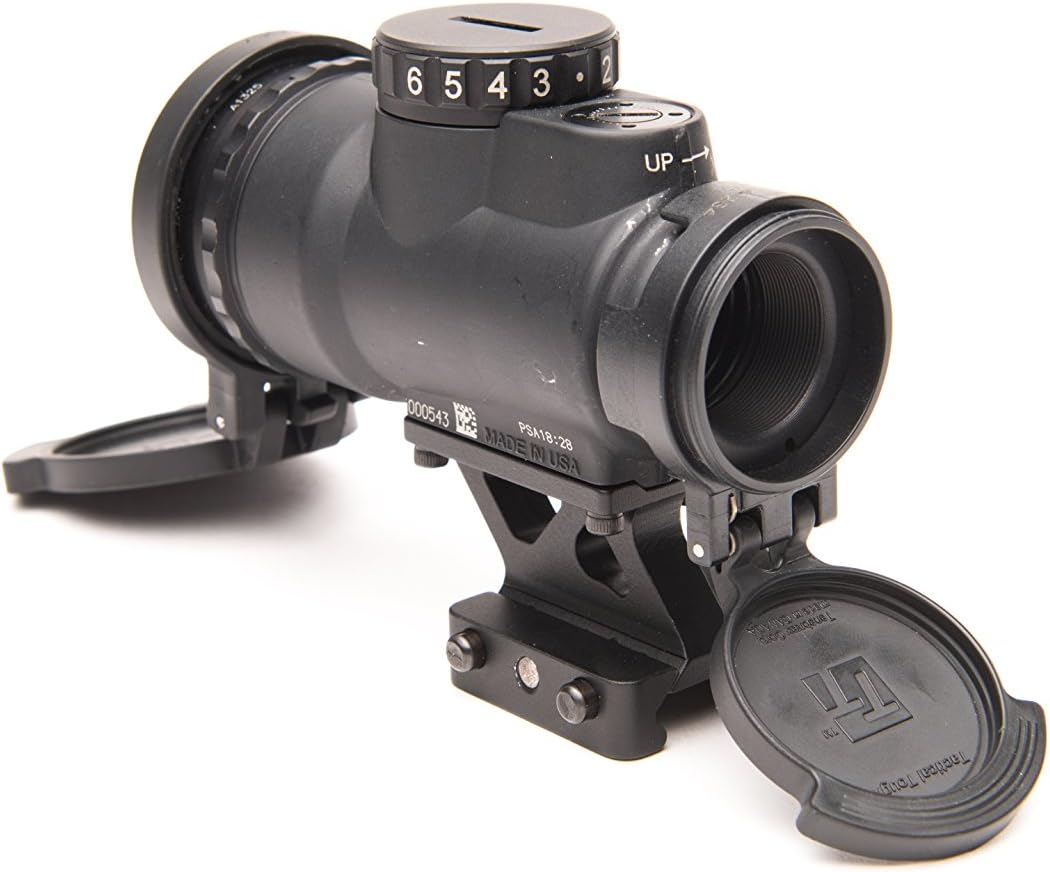
The Trijicon MRO is a modern compact red dot with a large viewing window and crisp reticle. It strikes a great balance between ruggedness, low weight, and excellent eyebox — helpful when you need fast target acquisition on a recce platform.
Product specs
- Reticle: 2.0 MOA dot (typical variant)
- 1x magnification
- Large objective/window for quick sight picture
- Durable aluminum housing, sealed
- Battery-access design with easy replacement
- Multiple brightness settings
My personal experience with the product (detailed)
What I appreciate about the MRO is the window — it’s forgiving if you don’t have a perfect cheek weld or when shooting from unconventional positions, a frequent reality in recon-style work. The dot is bright and clean, and the sight feels lighter than many aimpoint-sized units while still being stubbornly reliable. In run-and-gun drills the MRO’s generous eye relief and field of view saved seconds compared to narrower-window micros.
Online customer comments / discussions
Community feedback often points to its balance of price and performance. Enthusiasts praise the sight picture and clarity, while some note that mounting height choices are important to maximize co-witness and cheek weld ergonomics.
Mounting method
Direct Picatinny mount; optionally paired with low or riser mounts depending on iron sight co-witness.
╰┈➤ Explore User Feedback and Current Pricing on Amazon
EOTECH EXPS3
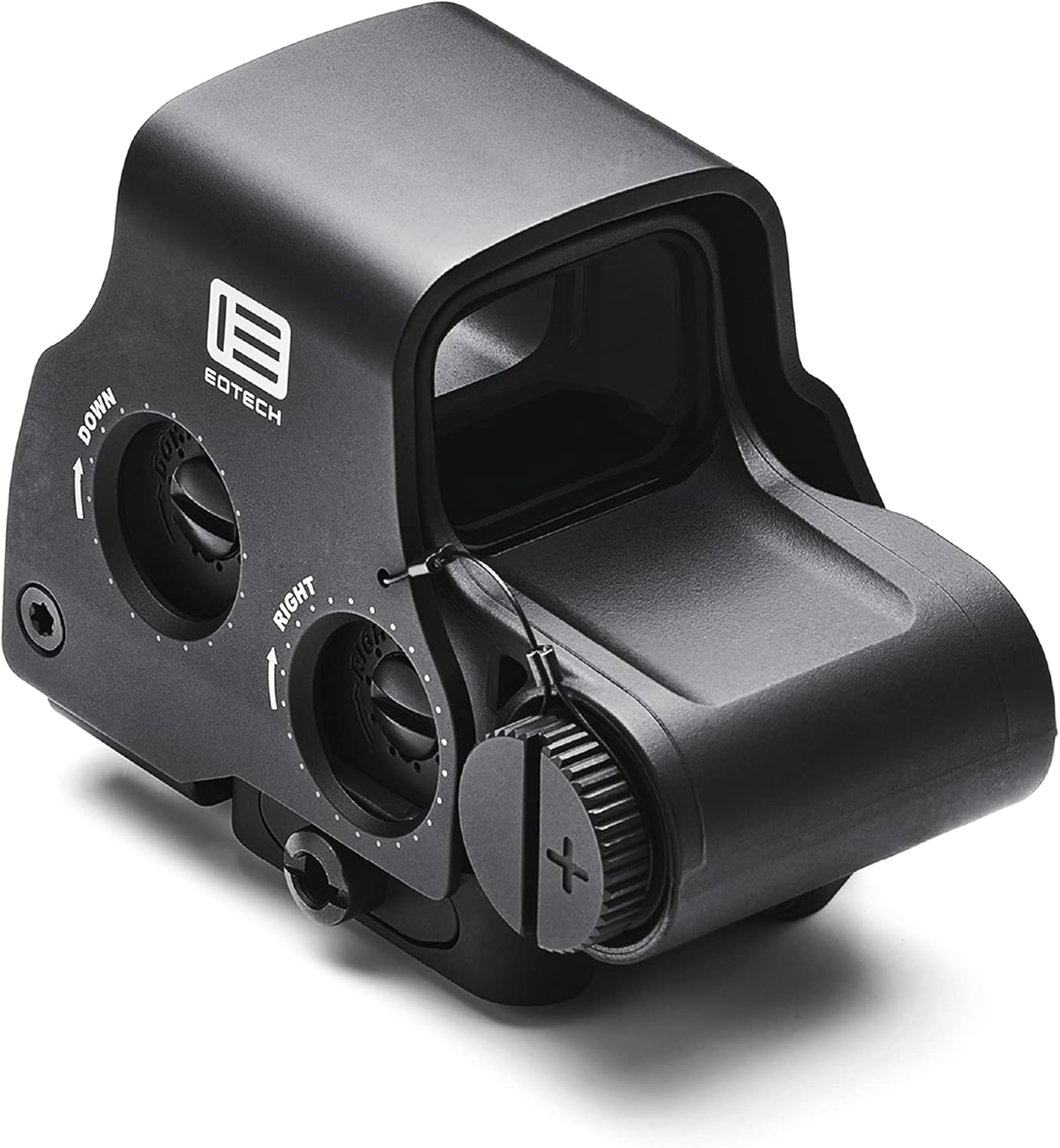
The EXPS3 is a holographic sight built for fast target acquisition, especially at close ranges. When speed and both-eyes-open shooting count, EOTECH’s holographic reticle pattern gives you an instinctive sight picture that many shooters prefer for dynamic engagements.
Product specs
- Reticle: 1 MOA center dot with large horseshoe (holographic)
- Parallax-free at typical engagement distances
- Rapid target acquisition with both eyes open
- Robust, sealed housing
- Night-vision compatibility settings on many models
My personal experience with the product (detailed)
On a recce rifle where clearing rooms or rapidly scanning terrain is a likely scenario, the EXPS3 is exceptional. The horseshoe + dot reticle lets me index the target quickly and then refine with the central dot. The holographic pattern stays readable even with reflective surfaces or during rapid movement. Downsides: holographic sights can be heavier and consume more power than simple reflex dots, but they repay that cost in sheer speed.
Online customer comments / discussions
EOTECH users often rave about the speed and natural sight picture; debates in forums revolve around battery life vs. reflex sights and the holographic vs. red-dot trade-offs.
Mounting method
Direct to Picatinny; some users pair it with a low-profile riser depending on plate and backup sight setup.
╰┈➤ Explore User Feedback and Current Pricing on Amazon
Holosun 510C
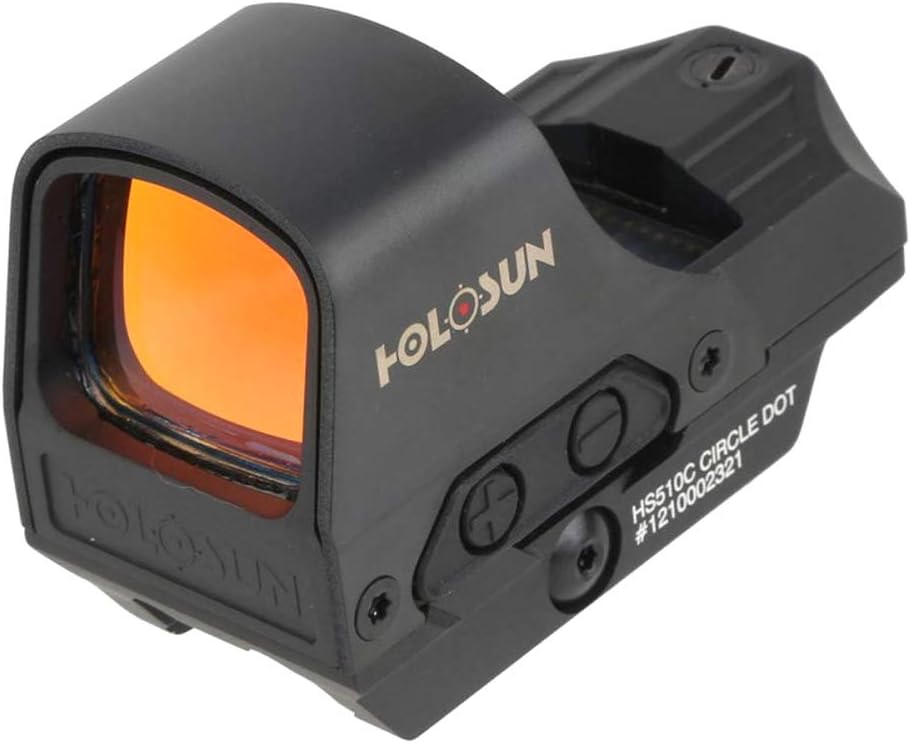
Holosun’s 510C is a feature-rich micro red dot offering multiple reticle options (circle-dot), solar backup, and efficient battery use at a price that undercuts many premium models. It’s become a popular choice for shooters who want advanced features without premium-brand prices.
Product specs
- Reticle options: 2 MOA dot with 32/65 MOA circle (depending on config)
- Solar backup + battery operation
- Shake-awake / auto-brightness on some variants
- Durable aluminum body
- Compact footprint
My personal experience with the product (detailed)
I ran a 510C on a scout-style recce carbine and appreciated how flexible it was — the circle-dot reticle helps quick indexing while the small dot allows precise aiming when needed. The solar-assisted battery backup is a surprisingly useful feature for field tasks where you may not want to carry spares. For the money, the 510C gets you modern features that used to be cost-prohibitive.
Online customer comments / discussions
Buyers often point to value: the reticle options and battery tech are praised, though some long-term users debate the absolute durability vs. legacy Aimpoint systems.
Mounting method
Direct mount to Picatinny with footprint adapters available for pistol slides or other rails when needed.
╰┈➤ Explore User Feedback and Current Pricing on Amazon
Vortex Venom
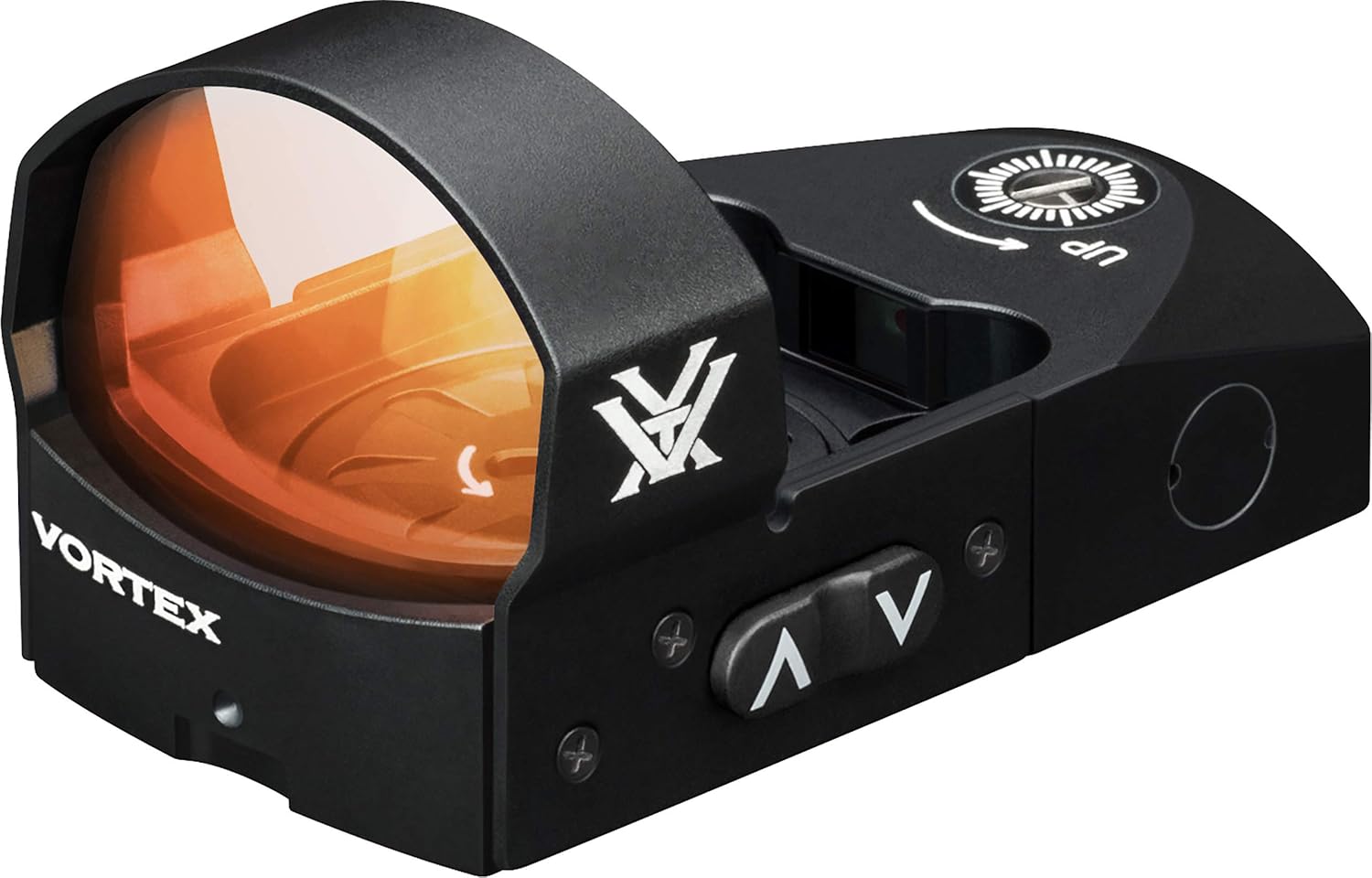
The Vortex Venom is an affordable, compact red dot with surprisingly good optical clarity and reliable performance for the price. It’s a popular entry-level optic for shooters building a practical recce rifle on a budget.
Product specs
- Dot size: 3 MOA typical
- Lightweight, low-profile design
- Multi-coated lens for improved contrast
- Simple brightness controls
- Lifetime warranty (Vortex)
My personal experience with the product (detailed)
I used the Venom as a “first optic” on a lightweight carbine and it performed well beyond its price class. Target acquisition was fast, and the dot was clear enough for typical recce engagements. The Venom is not a military-grade floating optic, but if you want a dependable sight that won’t break the bank and you value Vortex’s strong warranty, it’s an excellent pick.
Online customer comments / discussions
Users often note great value and good optical quality at the price. Common notes: limited advanced features and slightly larger dot than premium units, but an unbeatable warranty and customer support.
Mounting method
Direct Picatinny mounting; optional low or quick-detach mounts are available.
╰┈➤ Explore User Feedback and Current Pricing on Amazon
Primary Arms SLX MD-25
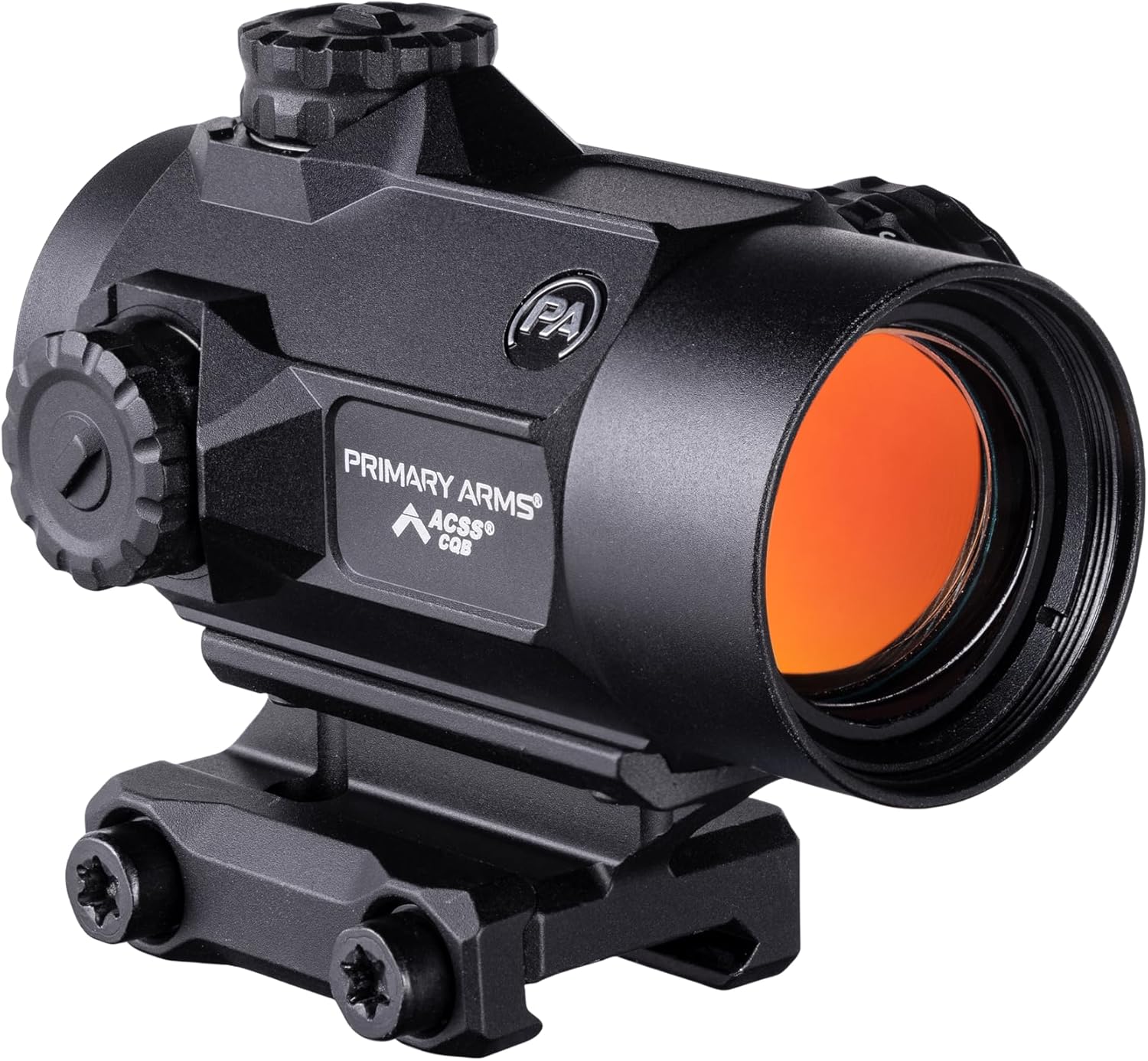
Primary Arms’ SLX MD-25 is a budget-friendly micro red dot with features that appeal to practical shooters: clear glass, durable body, and a small dot. For recce rifles built on a tighter budget, it offers impressive performance.
Product specs
- Dot size: 2 MOA
- Robust aluminum housing
- Efficient battery life with multiple brightness settings
- Compact footprint and lightweight
My personal experience with the product (detailed)
I’ve used Primary Arms optics as spares and on backup rifles; the MD-25 surprised me with its clarity and how well it held up under everyday knocks. If you can’t justify a premium Aimpoint or Trijicon on every rifle, this model gives you a lot of the necessary function for recce-style shooting at much lower cost. It won’t beat a CompM4 for lifetime ruggedness, but as a balanced economical choice it’s very strong.
Online customer comments / discussions
Community threads appreciate the value proposition; many owners recommend it as a great budget option or as a backup sight on multi-role rifles.
Mounting method
Direct Picatinny mount — lightweight footprint; adapter plates are available for specialized mounts if needed.
╰┈➤ Explore User Feedback and Current Pricing on Amazon
How to Choose the Right Red Dot for This Gun
When you pick a sight for a recce rifle, focus on four practical axes: durability & reliability, sight picture & reticle, mounting height/ergonomics, and logistics (battery life + serviceability). I’ll break these down.
- Durability & reliability (environment & abuse):
A recce rifle often lives outdoors and sees rough handling. If you need a sight that will survive hard knocks, heavy use, water and mud, prioritize ruggedized designs with sealed housings and proven field histories (e.g., Aimpoint Comp series). For lighter-duty recce builds, modern micro red dots like Trijicon MRO or Holosun offer durability with a smaller footprint. - Sight picture & reticle shape:
Decide whether you want a simple dot for pinpoint work (2 MOA or 1 MOA) or a combo (circle + dot / horseshoe + dot) for faster indexing. Holographic sights like EOTECH excel for both-eyes-open speed at close range; simple reflex dots often win for battery efficiency and weight. - Mounting height & co-witnessing:
How you mount the optic affects cheek weld and transition to irons. If your recce rifle is expected to use backup iron sights, choose a mount height that gives the desired co-witness (absolute or lower 1/3). Low-profile micros help preserve natural point-of-shoulder handling. - Battery life & logistics:
For extended patrols or rough logistics, battery life matters. Aimpoint-style units with years of battery life are attractive when you want to "set and forget." If you value features (multiple reticles, solar backup), you may tolerate more frequent battery checks. - Optical clarity vs. weight vs. cost trade-offs:
There is no free lunch. EOTECHs provide the fastest target acquisition but cost and weight more and use more power. Holosun often gives a modern feature set at mid-range cost. Decide which trade-offs match your mission profile. - Practical tip: try before you buy. If possible, test the sight on a rental or at a friend’s rifle. What looks good on paper can feel wrong in your cheek-weld or handling style.
(Note: the phrase above describing this decision framework is intentionally focused on practical selection rather than brand slogans.)
FAQs
Q1: Should I use a holographic sight or a reflex red dot on a recce rifle?
A: If your priority is absolute speed in close quarters and you shoot with both eyes open, holographic sights (EOTECH) have an edge. Reflex dots (Aimpoint, Trijicon, Holosun) typically win on battery life, weight, and long-term robustness.
Q2: What dot size is best for recce work?
A: 1–2 MOA dots offer the best balance: fine enough for precision, yet large enough to pick up in dynamic shooting. Larger dots (3 MOA) are simpler to acquire quickly but are less precise at longer ranges.
Q3: Do I need a quick-detach mount for a recce rifle?
A: It depends. A QD mount adds flexibility (easy removal for transport or changing optics), but a solid fixed mount gives better repeatability and often slightly better zero retention.
Q4: How important is reticle choice (dot vs. circle-dot)?
A: Very practical: circle-dot helps fast indexing to center mass, dot helps precision. If you expect mixed engagements, a combination reticle can be versatile.
Q5: Can I trust budget optics on a recce rifle?
A: You can get surprising performance from modern budget optics, but for mission-critical or professional use, proven higher-end optics offer more predictable longevity. Consider budget optics for secondary rifles or as an initial option.
Q6: How should I zero a red dot for a recce rifle?
A: Zero at a practical engagement range for your mission. Many builders choose 50–100 meters for recce rifles to balance close-quarters and intermediate targets. Validate zero from your typical shooting position.
Conclusion
Choosing the right red dot comes down to matching the optic’s strengths to how you actually intend to use the rifle. Whether you prioritize the bulletproof reliability of the Aimpoint CompM4, the compact versatility of the Aimpoint Micro T-2, the generous window of the Trijicon MRO, the speed of an EOTECH holographic, the rich feature set of a Holosun 510C, or the value of a Vortex Venom or Primary Arms SLX, there’s a solid option for every recce build. If you take away one thing from this guide, it’s to pick the sight that best fits your operating environment and handling preferences — and then practice with it until the sight and the rifle feel like a single tool.